
 Sure, a whole-house water treatment system can fix the rust staining, the smell of the water, and even make the water taste better. But did you know about the important three ways that the system REALLY helps you?
1) Your Health: At Water Pro, we know you want what's best for you and your family. Our systems provide clean drinking water which will not only make you feel better about the water you're using, but will also help to save you money. With Water Pro water your skin will stay naturally smooth and your hair will feel silky clean. Whether you're on well or county water, our certified filtered water systems remove contaminants such as pharmaceuticals, disinfection by-products, lead, arsenic, and many others. Installing a water filtration system that has been specifically built for your home or business can ensure peace of mind. 2) Your Home: With untreated water, you may be having concerns about contaminants or noticing embarrassing stains and odors throughout your home. Using a whole house water filtration system will ensure you protect the investment you've made in your home. Hard water scaling can build up in your pipes and fixtures. This can cause a reduction in water pressure throughout your home, especially noticeable in the shower. Whatever your concerns are, our Water Pro Specialists take the time to test your water and design systems that will meet your specific water needs. 3) Your Appliances: Appliances will benefit from treated water because hard water minerals bind together and cause build up. This can cause them to become clogged, making them inefficient. With treated water your appliances will use less energy and last longer. With conditioned water, you will use less soap and detergent and your clothes will feel softer, last longer, and retain color. Water Pro water helps prevent spotting and build up on dishes, glassware, coffeemakers, and fixtures. Reverse Osmosis water will make your drinking water, ice cubes, and coffee delicious. Enjoy all the benefits of Water Pro water! For more information on how you can have great water or to schedule an appointment for a free water test on your existing tap water, call 804.693.7294 or click the button below or send an email to [email protected]
0 Comments
 You may have heard that hard water negatively impacts your health, your home, and your appliances, but did you know that hard water can ALSO wreck a vehicle’s paint job!?!
Hard water is a major cause of water spots because it contains minerals such as magnesium and calcium. When water evaporates, it leaves mineral deposits that can etch into the paint/surface, causing damage. This type of hard water damage is exactly what happens to your glasses and dishware in your home! For many car buffs, they don’t want to see even one water spot on their car! Hardness minerals in hard water react with soap to form scum or curd, instead of lather, which reduces cleaning effectiveness. This not only wastes soap and detergents but you end up using more product and spending more money to attempt to get the desired result. And, you end up spending more time trying to remove dirt, streaks, and water spots! Don’t treat her like a jalopy. With softened water or a reverse osmosis water system, you’ll use great water AND less soap while keeping your precious gem on wheels bright and shiny! And, you’ll have more fun admiring how good she looks! Whether you’re prepping your baby or classic for the next car show or for a Sunday drive, make sure you wash her and primp her with GREAT water! If you're ready to make a change, let us know. For more information on how you can have great water or to schedule an appointment for a free water test on your existing tap water, call 804.693.7294 or click the button below or send an email to [email protected] 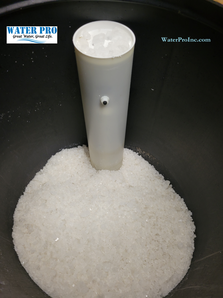 If you're not sure when you checked your salt tank last, it could be time to add more salt. But before you do, you need to know that it’s important to use correct salt in your brine tank AND the tank should be cleaned periodically.
If you’re using ordinary pellets or block salt you run the risk of problems with your brine tank; a key component to providing your family with great tasting water. Why does the type of salt matter? Pellets are more likely to cause bridging in your brine (salt) tank. Bridging is a packed solid layer of salt that spans across the width of the brine tank and does not allow the salt level to drop. So, you may look into your brine tank and think you have plenty of salt, but the salt is actually raised above the water level and is not going into the system when it regenerates. This means your system is trying to clean itself without cleaner. Our salt is a professional brand of salt and it's cleaner than most other brands. What makes our green bags of salt even more special? They aren't pellets. They are solar salt composition but still have the rust remover additive. Not only do you get a better value for your money, but you're using the best product for your system! Additionally, your brine tank should be dumped and cleaned at least annually. Here are a few questions to consider:
Too busy or not sure how to clean the tank yourself? You'll need to let the salt run down so the brine tank is a maximum of 1 foot full and then give us a call to come out and clean the tank. We can even bring more salt or you can have your own salt available when we come to clean and we can add it for you. Proper salt AND brine tank cleaning is recommended to make sure that your system is working properly while providing you and your family with great water. For more information on your salt or brine tank or to schedule an appointment for a brine tank cleaning, call 804.693.7294 or click the button below.  You did it! You did it! As a runner, you know how important your equipment is, right? Comfortable clothes and great fitting shoes. And, you put a lot of work into prepping and sweating for that 5K run! But have you considered that your water is also a key component to your success?
How so? Well, running and sweating increase the amount of fluid we need. Hence, you’re thirsty and you take a drink of water. Proper hydration is important, especially for runners, since without good water combined with heavy sweating you’ll become fatigued sooner and risk dehydration. Have you also considered that the type of water you drink might also make a difference to avoid headache, rapid heartbeat, dehydration, and fatigue? Should you drink any kind of water? The simple answer is no. Should you drink bottled water or water that’s good for you? While bottled water may be 'convenient' and 'easy to grab on the go' for your run, kind of like fast food, that doesn't mean it's good for you. If you're reading this article, you're probably pretty health conscious. I mean, you’re prepping for a 5K! And, you want to do what is best for you to win that race, help your family, and help the environment. With that being said, buying a case or two of 24 or 36 plastic bottles filled with 'water' on a regular basis really doesn't help you win that race. Nor does it help your family or the environment. Besides, do you really want to drink manufactured water from a plastic bottle even though you’re training so hard? What's the alternative? Great tasting water from your tap, of course! Stainless steel (food-grade) water containers are safer to drink from and aren't thrown away after one use like traditional one-time use plastic bottles. You can fill them at your RO (reverse osmosis) faucet with fresh, great tasting water. And you can even add fresh fruit or vegetables for more vitamins, taste or as a special treat! In addition, the stainless steel water bottle is a win-win for keeping beverages hot or cold for several hours. Why stop buying bottled water? Cost - Filling water containers from your tap costs pennies compared to buying plastic water bottles Hassle - No more lugging cases of plastic bottles from the store to the car to into your home Health - Drinking water from plastic bottles isn't good for your body Quality - You'll actually know where the water comes from Contamination - Plastic bottles exposed to extreme heat (sitting in the sun or heated vehicle) are not good for your body Regulation - You're in control of what is in your water Environment - The less plastic, the better for all of us If you're ready to make a change and drink water that's good for you while you’re out running, let us know. For more information on how you can have great water for your runs or to schedule an appointment for a free water test on your existing tap water, call 804.693.7294 or click the button below.  When people have really high pH they’ll say that their water feels slimy. Kind of like a snail! Even those with soft water but high-alkalinity tell us their water feels slimy.
This is different than the slippery feeling that people talk about with soft water. Many of our customers in the Northern Neck and Saluda areas find adding a dealkalizer solves their water issue. What is a dealkalizer? A dealkalizer system for your water removes carbonate ions by exchanging them with chloride ions by passing over an anionic resin bed. What is dealkalization? Dealkalization of water refers to the removal of alkalinity ions from water and lowers the alkalinity before it comes out of your tap. Chloride cycle anion ion-exchange dealkalizers remove alkalinity from water. These chloride cycle dealkalizers operate similar to sodium cycle cation water softeners. What’s the difference between a dealkalizer and a water softener? A dealkalizer mainly focuses on eliminating carbonate and bicarbonate ions to reduce alkalinity while reducing the slimy feeling, bitter taste, scaling and corrosion. A softener mainly focuses on calcium and magnesium ions (hardness minerals) while reducing spotty dishes, scratchy clothes, itchy skin, and scale buildup in plumbing and appliances. How do I know if my water is high in alkalinity? Your water may feel slimy and/or have a bitter or soapy taste. For more information on a dealkalizer or to schedule a dealkalizer appointment, call 804.693.7294 or click the button below.  We turn on our faucet to get a drink of water, to fill a pot to start making spaghetti for dinner, wash our hands or to take a shower. And, you probably just assume your water is okay, right? Hmmmm, is it? Here are 5 questions you should be asking: 1. How do I know if my home’s water quality is good? Request a free water analysis of your water. You’ll find out if you have hard water, iron, or other contaminants. 2. Why should I be concerned about hard water? Hard water causes spotty dishes, scratchy clothes, itchy skin, and builds up in your plumbing and appliances. 3. I’ve heard about iron in water. Should I be concerned about it? Iron causes rust stains on your drains, faucets, toilets/bathtubs/showers, and clothes. 4. What are the benefits of filtering my home’s drinking water? Filtering out harmful impurities in your water makes it healthier for your family and extends the life of your plumbing and appliances. Filtered water also improves the taste of your coffee, teas, and soups. 5. How can I solve my home’s water problems? Whether you have hard water, iron, or possible contaminants in your drinking water, we can help you choose the right products to provide your family with cleaner water. As a homeowner, it’s easy to forget all the ways water impacts your daily life… until there’s a problem. To help you see water clearly, we’d like to share some common signs of water issues. Click below to read more. Contact us today or click the link above to schedule a free water analysis appointment.
Need more info? Reach out to us at 804.693.7294 or send an email to [email protected] for more information. 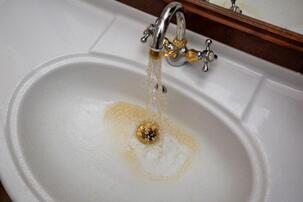 For starters, you should know what is in... or NOT in your water.
There are several types of tests that can be performed to check on the quality (or lack thereof) of your water. Mineral Test - this is a series of tests for iron (orange or brown "rust" staining), hardness (white build-up on fixtures), TDS (Total Dissolved Solids or "sodium"), odor (stinky or rotten egg smell), chlorine, pH, and tannins. These tests identify what's in your water and what equipment would be recommended to remove minerals and contaminants of concern. If you already have an existing system, we will test the water before (the source before the water comes into your home or business) and after (usually at your sink faucet) to determine how well the system is working. We perform this test at no charge. Bacteria Test - This tests for e. coli and coliforms. This test is usually required for mortgage loans when refinancing or purchasing a home. This test is also performed when there is a concern of well contamination. Other Contaminant Tests - We offer an extensive line of testing for additional contaminants of concern, such as lead, nitrate/nitrite, arsenic, fluoride, silica, aluminum, copper, and more. We offer all of the above water tests to homeowners, realtors, and commercial properties and would be happy to assist! Contact us today or click one of the links below to inquire about scheduling a water test appointment. Need more info? Reach out to us at 804.693.7294 or send an email to [email protected] for more information. 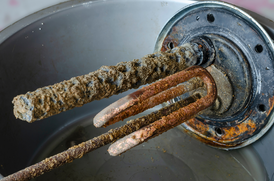 It usually happens when you least expect it! Sure, today’s water heaters seem to be better designed than older models but they don’t seem to last as long. That’s why you’ll want to know the signs to watch for before it’s too late!
Did you know that water heaters require regular inspection and maintenance? Regular inspection consists of a) checking and changing the anode rod if needed (especially on hard water), b) testing the thermostat and valves, and c) checking for rust or leaks. Regular maintenance consists of draining and flushing the unit and should be done every six months or no less than once per year. These simple tasks can actually prolong their lives and use for years to come. An electric water heater will last between 10-15 years. A gas water heater will last between 8-12 years. Any one of the seven indications below can be a sign of a problem. Here's what to watch for: 1) rust appears in the hot water faucets 2) lukewarm water and low water pressure 3) water pooling around the base of the water heater 4) hot water has a metallic smell and taste 5) strange, unfamiliar noises when water tank is heating 6) run out of hot water faster than usual 7) higher energy bills Water Pro can repair and/or replace your water heater. If you would like us to provide you with a quote, it’s as easy as sending us: 1) gallons size, 2) dimensions of available space, and 3) a picture if possible. Contact us today to inquire about water heaters or to schedule your water heater service appointment! Reach out to us at 804.693.7294 or send an email to [email protected] for more information. 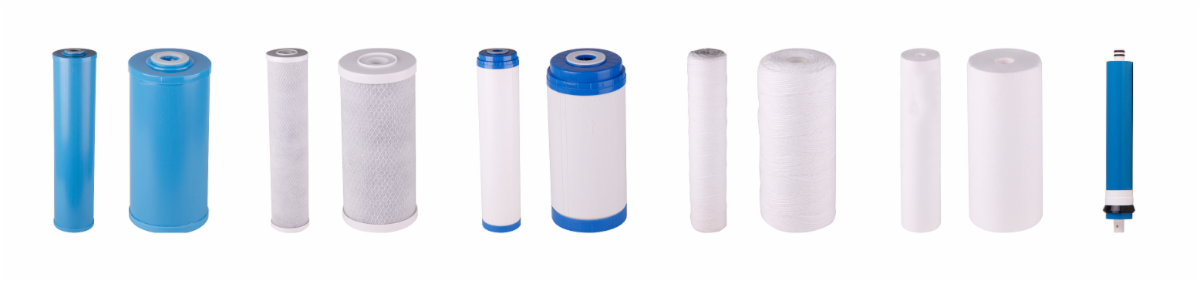 A filter is a filter, right?
Nope, there are various types of water filters, sizes, and micron ratings for each filter. The quality of water and your water system will determine which filter is best for you and your family. Sediment filters remove dirt, debris, and even microscopic particles from your water. The pore size of filter cartridge is measured in microns, i.e. 5, 10, 20, etc. The smaller the micron rating, the finer the particulate removed. Sizing of micron filters depends upon the smallest particle that needs filtering from your water. Smaller micron may not always be the better option because the smaller rating may immensely impact the water flow (pressure), need to be changed more often, and cost more in the long run. Along with micron rating is the special importance of the type of filters. Some of the most common ones are: melt blown, string, and carbon. Melt blown filters contain a fixed pore structure - the polypropylene fibers do not separate and ensure trapped contaminant particles do not come into your house water. String filters capture large particles and can separate which allows smaller particles to come into your house water. Carbon cartridge filters are effective toward keeping out chemicals and odors from coming into your house water but cost more, often times aren't necessary, or there is a better long-run alternative. How often should you change your water filter? The frequency for changing a water filter depends on water quality, water usage, and type of filter. At Water Pro, we have varied micron filter ratings, types, and sizes and can assist you with choosing the best filter(s) for your water system. Call or contact us today whether you would like to pick up your filter(s), have your filter(s) delivered (no additional charge with a minimum purchase), or like many of our customers that care about their water, we'll bring the correct filter(s) and change them for you. Want to love your water? We can also set you up on a filter change schedule so that you don't have to worry about those filters or changing them yourself anymore! Contact us today to inquire about filters or to schedule your next filter change appointment! Reach out to us at 804.693.7294 or send an email below for more information. 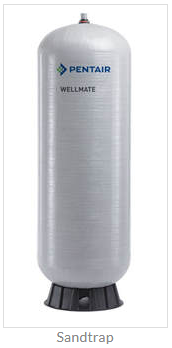 Sand or sediment in your water can cause serious issues of deteriorating your fixtures and appliances and will also decrease your water pressure.
The sand and sediment may cause pipes and aerators to clog up and could result in pressure loss in your home. The fixtures in your home, including sink faucets and shower heads, as well as your washing machine, etc. will wear out ahead of time and could cost you thousands of dollars. The sandtrap is a unique way to separate and trap heavier sand and particles to prevent them from getting into your home. Contact us today or call (804) 693-7294 if you'd like to set up an appointment for a free estimate and/or get more information on a sandtrap. |
AuthorWater Pro Inc. is veteran owned and locally operated in Gloucester, Virginia. We specialize in water treatment, well repairs, and plumbing for residential and commercial properties. Water Pro is proud to serve all of the Middle Peninsula, Hampton Roads, Northern Neck, and Richmond areas of Virginia. Since 2001, Water Pro has continued to build a solid reputation for integrity and good business practice within the community. We install and maintain water purification and filtration systems that are superior in quality and efficiency. Archives
June 2024
Categories
All
|
 RSS Feed
|
|